There’s a moment every gardener knows well. You’re standing in the middle of your garden, arms full of tomatoes, a few cucumbers tucked under your chin, and a bundle of carrots dangling from one hand.

You’re trying not to drop anything as you shuffle toward the back door, and somewhere between the garden bed and the kitchen sink, a ripe tomato hits the ground. Splat.
We’ve all been there. And that’s exactly why building your own harvest basket, also called a garden trug, is one of the most satisfying and useful projects you can take on as a gardener.
It’s simple to make, doesn’t cost much, and once you have one, you’ll wonder how you ever managed without it.
If you’ve never heard the word “trug” before, don’t worry. It’s not a term most people use every day.
A garden trug is basically a shallow, open basket designed for carrying fruits, vegetables, flowers, and herbs from the garden to the kitchen. Think of it as a purpose-built tool for harvest time.
Traditional trugs have been around for centuries. They were originally made from strips of willow or sweet chestnut, bent and woven into a curved shape with a handle across the top.
They were a staple in English cottage gardens, and for good reason, they’re lightweight, sturdy, and perfectly shaped for gathering produce without bruising it.
The version we’re talking about here is a more modern take on the classic design. Instead of woven wood, this DIY garden trug uses a simple wooden frame with a mesh bottom.
That mesh bottom is the real game-changer, and we’ll get into why in just a minute.
What makes a trug different from a regular basket or bucket is the shape and intention behind it. It’s shallow enough that your produce sits in a single layer or close to it, which means less bruising and less piling things on top of each other.

The wide opening makes it easy to lay things in gently rather than dropping them in. And the handle across the top keeps your hand centered over the weight, which makes carrying even a full load feel balanced and manageable.
Everything about the design is built around one purpose: getting your harvest from the garden to the kitchen in the best possible shape.
Here’s the thing about harvesting vegetables, especially root vegetables like carrots, beets, radishes, and potatoes.
When you pull them out of the ground, they come with a whole lot of dirt attached.
Normally, you’d carry them inside, dump them in the sink, and spend a good chunk of time rinsing and scrubbing before you can even think about cooking.
But with a mesh-bottom harvest basket, you can skip that mess entirely. The open mesh design lets you rinse your root vegetables right there in the garden.
Just hold the basket under a hose or over a bucket of water, give everything a spray, and the dirt falls right through the bottom. By the time you walk inside, your produce is already clean. No muddy sink. No clogged drain.
It’s one of those small design details that makes a huge difference in your daily garden routine. Once you’ve used a mesh-bottom trug, going back to a regular bucket or basket feels like a downgrade.
Beyond the rinsing benefit, the mesh bottom also helps with airflow. When you pile tomatoes, peppers, and herbs into a solid-bottom container, moisture can get trapped underneath.
That trapped moisture can lead to bruising, soft spots, and even mold if you don’t process your harvest right away. With mesh, air circulates freely around your produce, keeping everything fresh and dry.
Sure, you can buy a harvest basket online or at a garden center. There are some nice ones out there. But building your own has a few distinct advantages.
First, it’s cheaper. A quality wooden garden trug can cost anywhere from thirty to seventy dollars or more, depending on where you shop. Building one yourself usually costs a fraction of that, especially if you have some scrap wood lying around.
Second, you can customize it. Want a bigger basket for your sprawling tomato patch? Make it bigger. Prefer a narrower one that fits between raised beds? Adjust the dimensions. When you build it yourself, you get the size and shape that works for your garden.
Third, there’s something deeply satisfying about using a tool you made with your own hands. Every time you carry that basket into the garden, you’ll feel a little spark of pride.
It connects you to the process in a way that buying something off a shelf never quite does. Gardening is already a hands-on activity, and making your own tools just extends that feeling.
And fourth, it’s a genuinely easy project. You don’t need a workshop full of fancy tools. You don’t need years of woodworking experience. If you can measure, cut, and drive a few screws, you can build this basket in an afternoon.
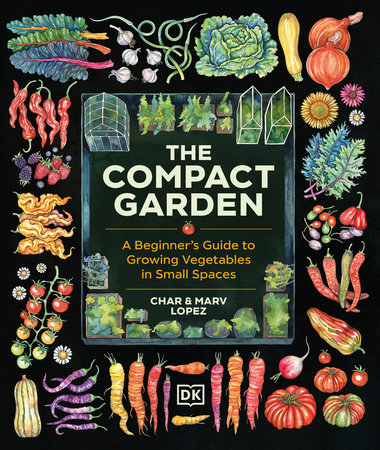
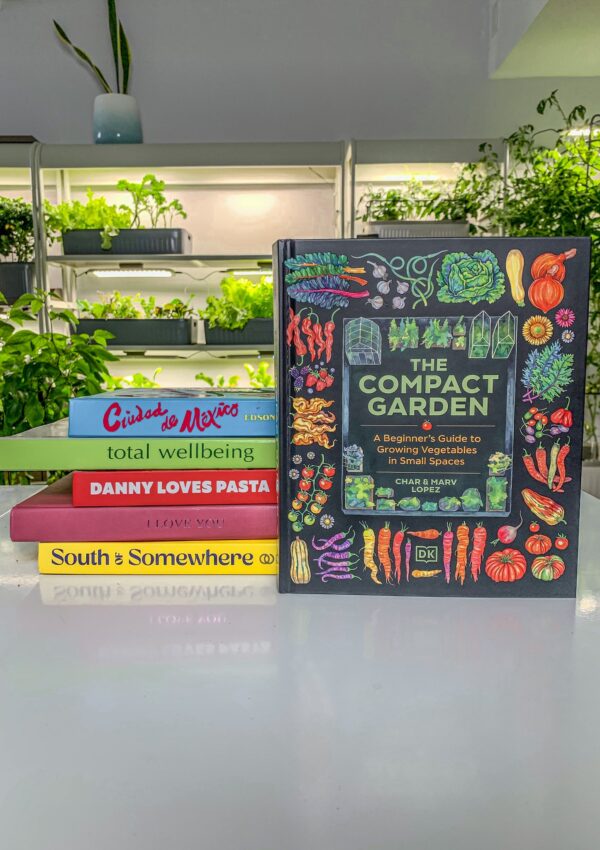
We walk you through every step in this reel, and if you want the full measurements and detailed instructions, they’re all in our new book The Compact Garden.
? Available for preorder now! geni.us/TheCompactGarden
Happy building, and happy harvesting! ?